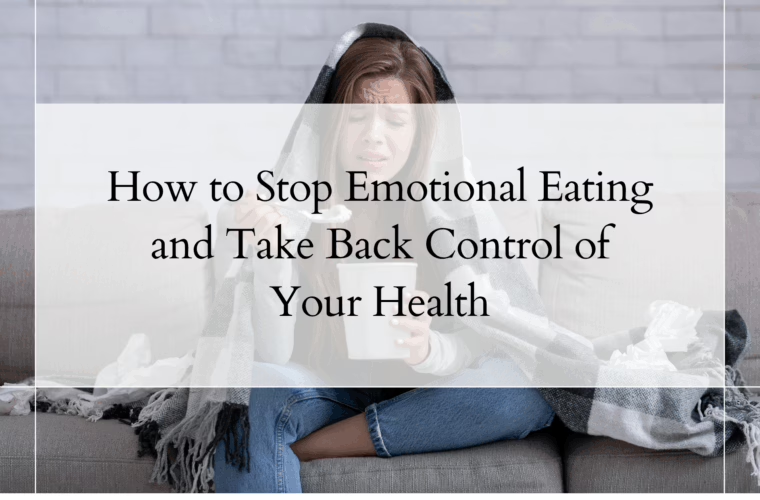
If you’ve ever found yourself eating biscuits in the car on the way home, reaching for crisps at night after promising yourself you wouldn’t, or hiding wrappers from a partner, you’re not alone. Many people struggle with emotional eating and wonder how to stop emotional eating once and for all.
This article unpacks the cycle of emotional eating, explains why eating doesn’t always make you feel better, and offers real-life strategies to manage emotional eating without guilt.
With relatable stories and practical steps, you’ll learn how to recognise the difference between emotional and physical hunger, understand your personal triggers, and discover healthier ways to deal with your feelings. If you’ve been searching for how to quit emotional eating or emotional eating and how to stop it, you’re in the right place.
What Is Emotional Eating and Why Do We Do It?
Picture this: Jane is a 42-year-old mum of two who works full-time. After a stressful day juggling work emails and the kids’ homework, she finds herself standing in the kitchen, eating food straight from the fridge. She’s not physically hungry (dinner was only an hour ago) but the eating feels like a release. After all, she deserves a treat, she’s earned it.
This is emotional eating: using food as a way to cope with emotions rather than to satisfy physical hunger. For Jane, the act of eating doesn’t stop the stress or the overwhelming emotions, but it temporarily numbs them. She says, “It makes me feel better in the moment, but ten minutes later I’m guilty or ashamed.”
This is just one example of the emotional eating cycle. There are many more triggers, and they are all unique to our individual lives. The truth is, there is a very specific way our brain works when it comes to food.
One of the core parts of my 1:1 Mind & Body Transformation Coaching Programme is helping clients understand the reasons why they eat, even when they know not to. In fact, this part of the programme has some of the biggest breakthroughs for the women I work with.
What Triggers Emotional Eating?
For Sandra, a 39-year-old teacher, the trigger is criticism. Her partner makes comments about her weight, and she finds herself sneaking chocolate in the bathroom. For Emily, it’s boredom: “I’ll grab biscuits during marking papers just to break up the monotony.”
Common triggers include:
Stressful workdays
Conflict with a partner
Loneliness at night
Boredom and routine
And the frustrating part is, you may not even know what triggers your emotional eating—and that’s okay. In my health coaching practice, I work with women who struggle with emotional eating, overeating or binge eating, and many of my clients come to me saying they really struggle to identify their triggers.
That’s why it’s helpful to work with an emotional eating coach who can ask the right questions and help you understand your eating behaviours and the emotions behind them. Because when you use food as a comfort, you’re not just eating, you’re trying to deal with difficult emotions. The problem is that eating doesn’t actually deal with your feelings; it just suppresses them temporarily.
How Does the Emotional Eating Cycle Work?
Here’s how the emotional eating cycle often looks:
You’re stressed after work.
You crave chocolate (or some other comfort food) for an emotional release, or just something for yourself.
You eat, and it makes you feel better briefly.
Then guilt sets in: “Why can’t I control myself?”
The guilt triggers more difficult emotions and actually restarts the cycle all over again. Hence why many women say to themselves, “I’ve blown it now, I may as well eat what I want.”
This cycle of emotional eating keeps you stuck. As one client told me: “I kept eating, then felt awful, and then I ate again because I felt awful about eating.”
The good news is, this cycle can be broken once you understand it and have the right tools and support in place to stop emotional eating habits.
Why Eating Doesn’t Always Make You Feel Better
Food can release endorphins that make you feel great in the short term, but eating doesn’t resolve the underlying feelings. That’s why eating doesn’t always make you feel better in the long run.
One woman told me: “I’d eat chocolate digestives after putting the kids to bed. It made me feel better for about five minutes, but then I was cross with myself and worried about my weight.”
The truth is, eating doesn’t deal with your feelings very well in the long term. It may make you feel better in the moment (because that’s how our brains work). Instead, it can leave you feeling guilty or ashamed, and even worried about your physical health.
The frustrating part is, you likely already KNOW your eating behaviours are harming your physical and mental health in the long run, and have tried to quit. But you always find yourself repeating the same habits and “giving in”, which makes you feel weak and annoyed with yourself.
If you learn nothing else from me, please learn this: IT IS NOT YOUR FAULT!
You are not weak or lacking willpower. In fact, my clients are some of the strongest and smartest women I have ever met. They have willpower in spades! This emotional eating cycle keeps repeating itself because of the way all our brains are wired. Once you understand that, then you can start to overcome emotional eating for good.
Can Stress Make You Overeat?
Absolutely. Stress triggers cortisol, the body’s stress hormone, which makes you crave sugar and unhealthy foods for quick energy. That’s why you might want to eat chocolate after a tense meeting or turn to food late at night when you’re drained.
And many of us are so used to stress in our lives that we don’t even notice that we are stressed – but even low-level stress has an impact on our eating behaviours and health.
Stress eating may lead to overeating, and over time, this can impact not only weight but also your mental wellbeing.
You might think eating food is a way to cope, or you may feel numb and eat to feel something, but in reality, you’re stuck using food as a comfort instead of finding healthier ways to deal with your emotions. Until you confront that, you will keep overeating.
How to Stop Emotional Eating: Recognise When You’re Eating Your Emotions
Ask yourself:
Am I eating because I’m hungry, or because I’m stressed?
Do I want to eat only comfort foods like crisps or biscuits?
Do I feel guilty or ashamed after eating?
If you’re eating even when you’re full, or you’re bored but want to eat, those are signs you’re eating your emotions.
Keeping a diary of what you eat, when, and what you were feeling can help you link food and your feelings; however, this can be triggering for some women, so only use it if appropriate.
Over time, you’ll be able to recognise your personal triggers and see that emotional eating doesn’t solve stress.
Eat Regular Meals
You want to be eating three meals and two snacks a day. By eating three meals and two snacks a day, you will be balancing your blood sugar levels. When blood sugar is too low, it can lead to the “sod it, I’m having it” type of eating binges that you want to avoid.
One of the reasons women come to me struggling with overeating is because they are actually undereating. It’s why diets eventually end up with us bingeing or overeating – because your body needed food! The popular 1,200 calories a day is WAY too low for women. Deprivation is one of the biggest triggers for overeating. The tricky part is that women who’ve been dieting for years and even decades struggle to identify their own physical hunger cues.
So you might be thinking, “But I don’t feel hungry, I’m fine.” But your body may be crying out for food.
For some women, reading that will be quite triggering – especially women who fear gaining weight because they find it so hard to lose again. If that’s the case, I highly recommend you book in for a free clarity call with me so you can talk it through in a judgement-free space, and we can discuss healthier ways forward.
What Is the Difference Between Emotional and Physical Hunger?
Imagine finishing dinner and then, half an hour later, feeling an urge to eat a packet of crisps. That’s likely emotional hunger – it comes on suddenly, with cravings for specific foods.
Physical hunger is different: it comes on more gradually, with rumbling in your stomach, and almost any food sounds good. Eating satisfies it, and you feel full afterwards.
Quick test:
If you want to eat only comfort foods like biscuits or chocolate, it’s likely emotional.
If you’d happily eat soup or a sandwich, it’s probably physical.
Recognising the difference between emotional and physical hunger is key to managing emotional eating.
But here is the nuance most therapists, nutritionists and even health coaches don’t always understand.
A lot of women struggle to notice their physical hunger cues – which makes it harder to identify when they are emotionally overeating. It’s not uncommon for people to come to me who have been dieting for decades and are completely unattuned to their own physical hunger cues. Many women who have been dieting for years are so used to having someone else tell them how to eat that they come to me and say, “I don’t even know how/what to eat anymore! I just want to feel normal around food.”
I also commonly see women undereating and restricting themselves so much that it’s actually fuelling their emotional eating. That’s why one of the first things I do with clients in my Mind & Body Transformation Coaching Programme is get them eating regular meals.
Practical Ways to Stop and Manage Emotional Eating
Stopping emotional eating isn’t about willpower – it’s about having healthier ways to deal with your emotions, and that takes time, understanding, and very often professional support.
However, there are some strategies you can use to try to stop emotional eating in the short term if you don’t have the budget for professional support right now.
Mindful Eating
Mindful eating helps you be more aware of your eating and allows you to develop the skill of listening to your own body and learning to trust yourself around food again.
However, please note that mindful eating or intuitive eating alone does not overcome emotional eating or binge eating. Used alone, intuitive eating strategies in particular can end up with one big binge. Remember, mindful eating and intuitive eating are one tool that form part of a bigger picture.
Even more, many women who have been dieting for a long time really struggle with mindful eating because they can’t always identify hunger and fullness cues as well.
Tick Something Off Your To-Do List
Replace eating habits with dopamine-rewarding activities. This is a simplified version of a key tool I use with clients.
Many coaches or therapists will tell you to do self-care activities, and while that can be useful, when it comes to the brain and quitting emotional eating, it’s not quite the right advice.
Instead, when you get a craving or urge to binge eat, start doing something off your to-do list instead. Such as cleaning out a drawer, tidying up around the house, or finishing the ironing.
Yes, taking a bubble bath will certainly be more appealing than doing the ironing! But a self-care activity does not give you the same dopamine hit that ticking something off your to-do list does.
Map Your Own Triggers
While awareness alone won’t solve everything, it’s an important step to stop your overeating.
Keeping a food and mood diary can be useful for creating more awareness around your eating habits. Start by noting down what you ate and when, but instead of the usual calorie counting and shaming, note what was going on at the time. What had happened, what emotions did you feel?
Maybe it was an argument with your partner or a bad day at work—or maybe you’d been having a great week. Note it down for a few days and see what you notice.
PLEASE NOTE: For some women, this is too triggering. If it’s too difficult for you, then don’t do it. There are other ways.
Could Emotional Eating Become an Eating Disorder?
Occasional comfort eating is normal, but when you overeat regularly to cope with difficult emotions, it may tip into disordered eating. If you feel unable to control it or binge regularly, it may be a sign of binge eating disorder.
Professional support can help you manage your emotions, identify underlying feelings, and improve your relationship with food. My 1:1 Mind & Body Transformation Coaching Programme uses a step-by-step process to help you stop emotional eating and binge eating for good.
The framework I use has been proven to work for hundreds of women who have been able to overcome emotional and binge eating and learn how to eat normally again so food no longer rules their life.
If you’d like to know more about how you can work with me privately, then take a look at my Mind & Body Coaching Programme here where you will find more details about working with me 1:1.
If you already know you want professional support or have questions you want answering in person, then book in for a free 30-minute clarity call.

Sarah Parker - Health & Life Coach
I’m Sarah and I’m a certified health coach and emotional and binge eating specialist. My mission is to help women undo years of chronic dieting and weight struggles to finally understand why they feel out of control around food, and break free from the cycle for good.